A team of Israeli scientists has uncovered new evidence suggesting that modern wine and table grapes originated from wild grapevines native to the Levant, reshaping long-held assumptions about how and when fruit crops were first domesticated.
The study, led by Dr Elyashiv Drori, head of the Samson Family Grape and Wine Research Centre at Ariel University, found that Israel’s indigenous wild grapevines (Syl-E1) were the genetic source of all cultivated table grape varieties (CG1), which later spread across Europe to form most of the world’s known wine grapes.
“Our findings provide important insights into the domestication and evolution of grapevine, which is a religiously, culturally and economically important crop,” said Dr Drori. “The Israeli wild grapevines we have collected over the past 12 years hold great potential for understanding resistance genes and adapting vineyards to harsh, dry conditions – an increasingly vital goal in the face of climate change.”
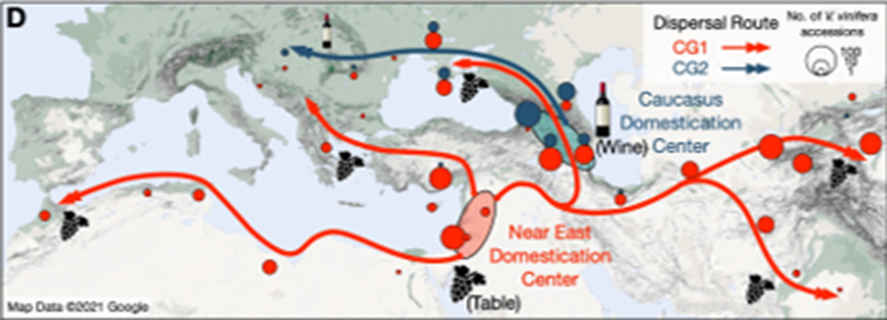
The discovery, made through a long-term collaboration with Prof Ehud Weiss of Bar-Ilan University and Dr Sariel Hubner from Migal Research Institute, challenges the long-accepted belief that perennial fruit crops were domesticated thousands of years after cereals and legumes.
“This research is a breakthrough in our understanding of early agriculture,” said Prof Weiss, a leading archaeobotanist. “We now have evidence that perennial crops like grapes were domesticated at the same time as annuals such as wheat and barley, around 10,000 years ago – and that this process occurred simultaneously in two distant regions, a phenomenon never observed before.”
The findings build on earlier work published by the same team in 2021, which first proposed that grapevine domestication occurred locally in Israel. The latest results provide the strongest genetic evidence yet that the cradle of viticulture may lie in the ancient landscapes of the Levant – a revelation with major implications for understanding both agricultural history and the future resilience of the global wine industry.
